If a plumber has ever recommended a “camera inspection” and you weren’t quite sure what that meant, you are not alone. A sewer camera inspection is one of the most useful tools in modern plumbing, yet it is also one of the most misunderstood. The short version: it replaces guesswork with a live video tour of the inside of your pipes, so decisions get made on evidence instead of assumptions.
Below, we break down exactly what happens during an inspection, what the footage reveals, and the specific situations where a camera is worth every penny.
How a sewer camera inspection actually works
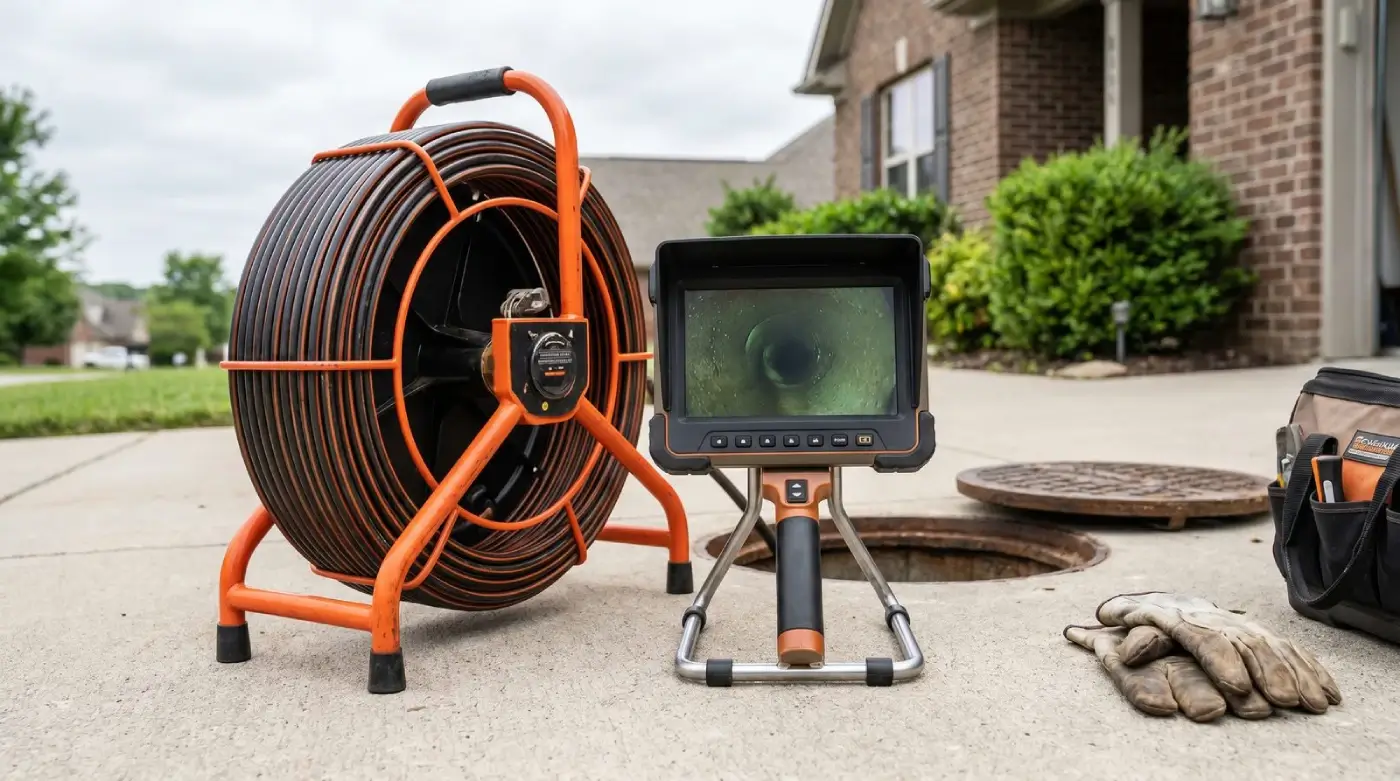
The equipment is simpler than it sounds. A waterproof, high-resolution camera is mounted on the end of a long, flexible cable that feeds off a reel. A technician inserts it through an existing access point (usually a cleanout, a removed toilet, or a roof vent) and slowly pushes it through the line while watching a real-time feed on a monitor.
Modern cameras include a radio transmitter and an on-screen footage counter. That means the technician can mark exactly how many feet down a problem sits and pinpoint its location from the surface, often within a foot or two. No more digging up an entire yard to find a single bad joint.
What the camera reveals
A good inspection is less about the camera and more about the trained eye reading the footage. Here is what we are looking for as the camera travels down the line:
1. Blockages and what is causing them
There is a big difference between a clog caused by a wad of wipes and one caused by a pipe that has collapsed. The camera tells them apart instantly. That distinction changes everything: one is a quick clearing job, the other is a repair. If you are dealing with chronic backups, our drain cleaning team uses the camera to confirm the line is genuinely clear afterward, not just temporarily flowing.
2. Tree root intrusion
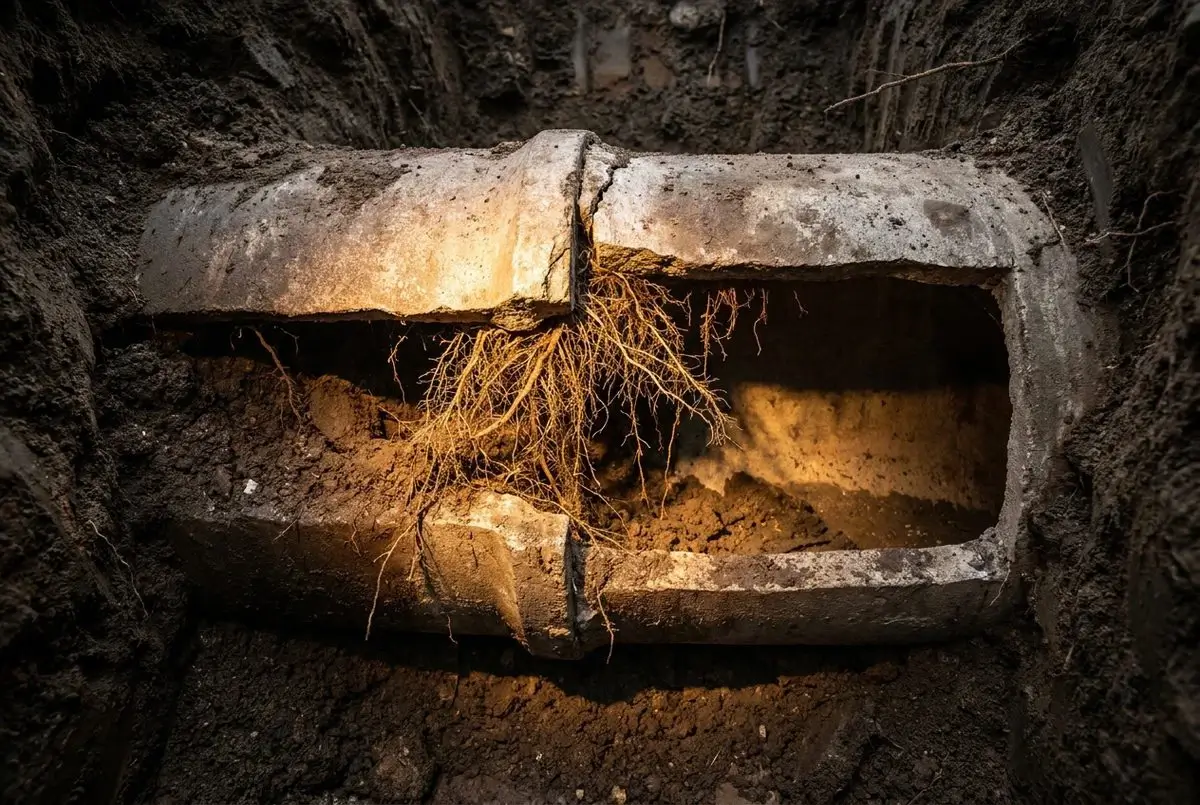
In older Portland neighborhoods, roots are the number-one enemy of sewer lines. They find their way into the smallest joint gaps, chasing moisture, and then expand until they choke the pipe. On camera, they look like fine hair-like webs or thick masses reaching into the flow.
3. Pipe material and its condition
The camera reveals what your line is actually made of: modern PVC, old cast iron, clay tile, or (in some vintage homes) Orangeburg, a tar-paper pipe that degrades over decades. Knowing the material tells us how much life the line likely has left.
4. Bellies, offsets, and cracks
A “belly” is a section of pipe that has sagged, creating a low spot where waste and water pool instead of flowing through. Offsets are joints that have shifted out of alignment. Cracks let groundwater in and sewage out. None of these are visible from inside your home, but all of them show up clearly on camera.
A camera inspection converts a vague symptom (“my drains are slow”) into a specific diagnosis: what is wrong, where it is, and how serious it is. That is the difference between an informed repair and an expensive guess.
When you should get a sewer camera inspection
You don’t need one every year. But there are a handful of moments when an inspection is genuinely worth it:
- Before buying a home. A standard home inspection almost never includes the sewer line, and a failing line is one of the most expensive surprises a new owner can inherit. This is exactly why our Day One Defense program builds a full camera inspection into every pre-move-in service.
- Recurring backups If the same drain clogs every few months, something structural is likely going on. A camera finds the root cause instead of treating the symptom again and again.
- Before a big remodel. Pouring a new patio or finishing a basement over a failing line is a costly mistake. Inspect first.
- Older homes. If your house predates 1980 and the sewer line has never been scoped, you are essentially flying blind on a system that may be near the end of its service life.
- After major root or grease problems. To confirm a cleaning truly worked and the pipe walls are intact.
What happens after the inspection
The footage is only valuable if it leads somewhere useful. After we scope your line, you get a clear explanation of what we found and, if there is a problem, a straightforward written estimate. Sometimes the answer is reassuring: the line is in good shape, no action needed. Other times the camera catches an issue early, while it is still a targeted repair rather than a full-line emergency.
Either way, you walk away knowing the real condition of one of the most important systems in your home (and one of the most overlooked). That is the entire point.
Curious what is happening inside your lines? Our team performs video sewer inspections across the Portland metro. Give us a call and we will show you exactly what we see.
The Lovett Plumbing Team
Licensed Portland plumbers serving the metro since 1997. CCB #125507.