Tankless water heaters get a lot of hype: endless hot water, lower energy bills, decades of service. Most of it is true. But “better on paper” and “better for your home” are not always the same thing, and the wrong choice can mean spending thousands more than you needed to.
Here is an honest, no-sales-pitch breakdown of how the two stack up, so you can make the call before your current unit fails on you.
The core difference
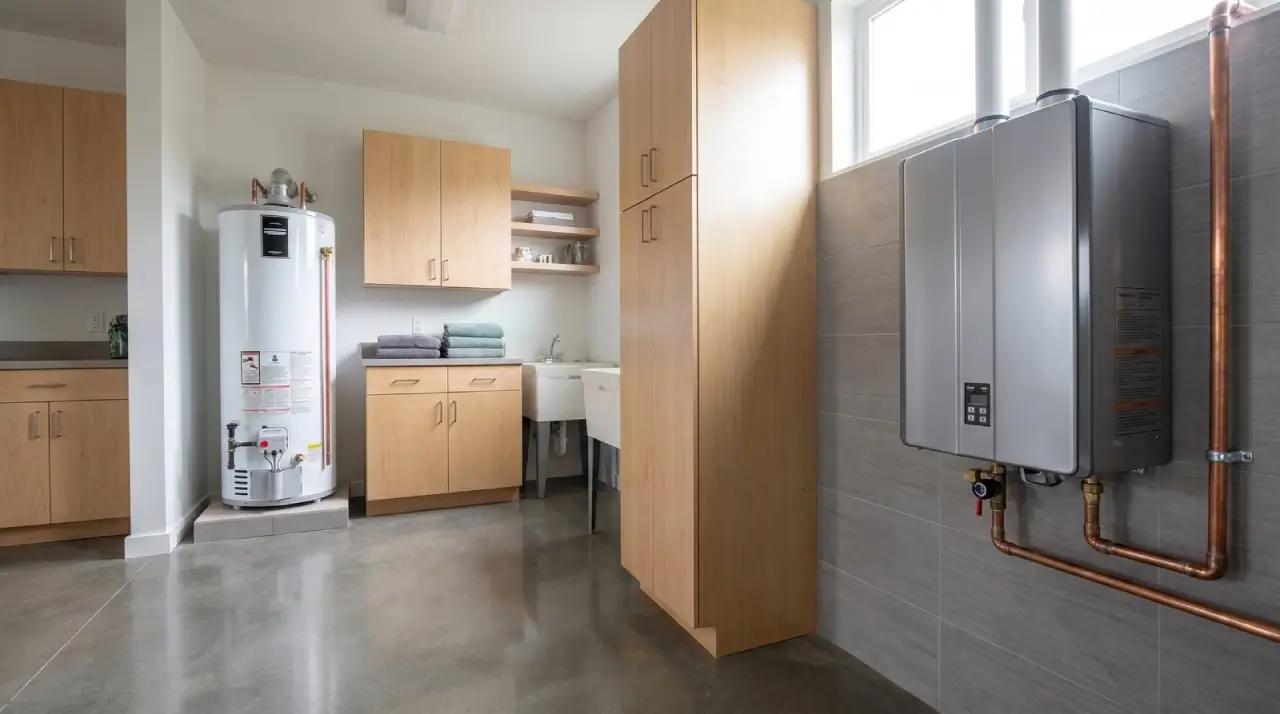
A traditional tank heater keeps 40 to 50 gallons of water hot around the clock, ready whenever you open a tap. A tankless (or “on-demand”) heater keeps nothing stored. It fires up and heats water instantly as it flows through, only when you need it. That single design difference drives every trade-off below.
Upfront cost
Tank wins here. A traditional unit costs less to buy and far less to install, because it drops into the same spot with the same connections as your old one. Tankless units cost more for the equipment, and installation can require upsized gas lines, new venting, or electrical work, especially the first time you switch. If budget is the deciding factor today, a tank is the practical choice.
Operating cost and efficiency
Tankless wins over time. Because a tank reheats its stored water all day to fight “standby heat loss,” it burns energy even when no one is using hot water. A tankless unit only runs when a tap is open, which typically makes it meaningfully more efficient month to month. The catch: it takes years of energy savings to offset the higher install cost, so the payback math depends on how long you plan to stay in the home.
Hot water capacity
This one is nuanced. A tankless unit delivers endless hot water (you will never run out mid-shower), but it is limited by flow rate: there is a ceiling on how much hot water it can produce per minute. Run two showers and the dishwasher at once and a single undersized unit can struggle. A tank has the opposite profile: it can dump a lot of hot water at once, but once those 50 gallons are gone, you wait for it to reheat.
A big household with simultaneous demand (multiple bathrooms running at once) often does best with a tank or a properly sized larger tankless system. A household that wants long, back-to-back showers without ever running cold loves tankless.
Lifespan
Tankless wins. A well-maintained tankless unit often lasts 20 years or more, while a typical tank averages 8 to 12. Over a long stretch in the same home, you might replace two tanks in the lifetime of one tankless unit, worth factoring into the cost comparison.
Space and maintenance
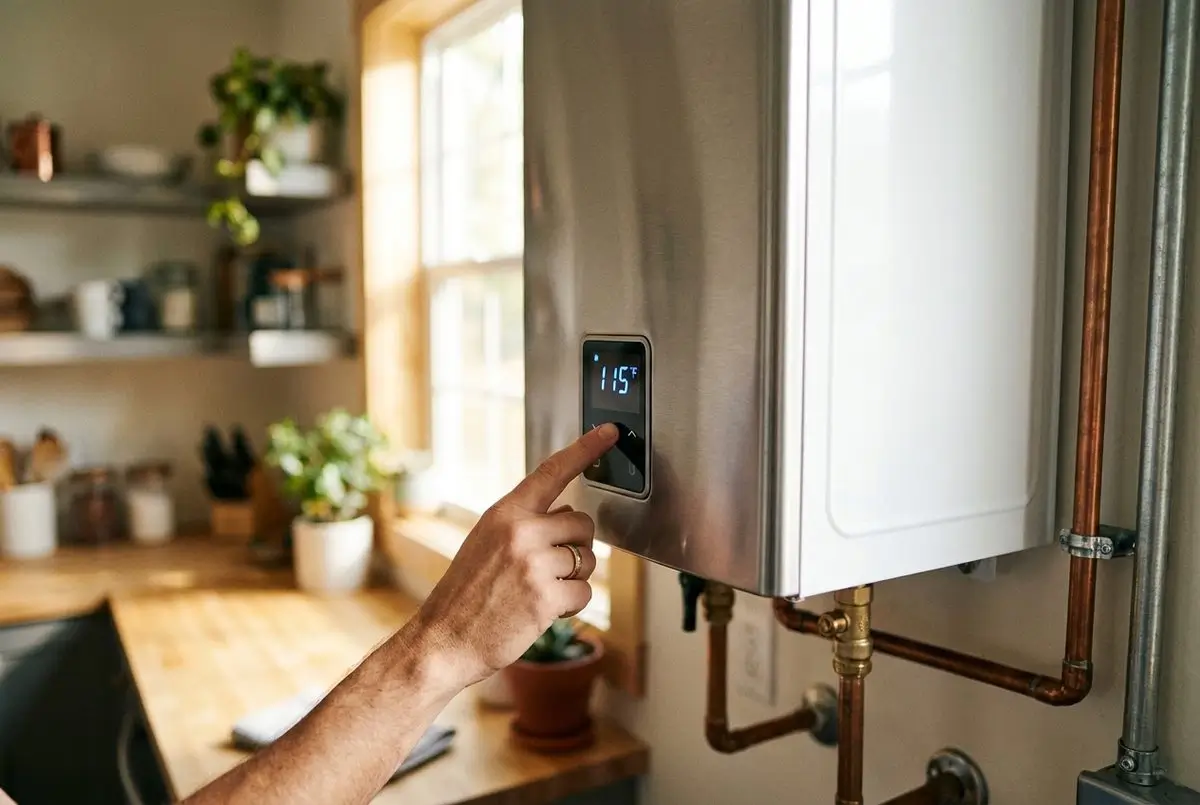
Tankless units are wall-mounted and compact, freeing up the floor space a bulky tank occupies, a real perk in smaller Portland homes and condos. On maintenance: both benefit from attention, but in our hard-water areas tankless units need periodic descaling to keep the heat exchanger clear. Skip it and efficiency drops. It is a simple service, just one you can’t ignore.
So which should you choose?
There is no universal winner. Here is the honest summary of what fits which home:
- Choose a tank if: you want the lowest upfront cost, you are replacing on short notice, or your household frequently runs lots of hot water simultaneously.
- Choose tankless if: you plan to stay in the home long-term, you value efficiency and a long lifespan, you want to reclaim floor space, or you are tired of running out of hot water.
The best decision comes from matching the system to your home’s actual hot-water demand, fuel type, and layout, not from a spec sheet. That is where an in-person assessment pays off.
Thinking about your options before your current unit gives out? Our team installs and services both system types every day. Learn more about our water heater services or give us a call. We will help you choose the right one the first time.
The Lovett Plumbing Team
Licensed Portland plumbers serving the metro since 1997. CCB #125507.